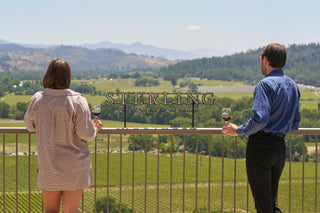
Every glass of Sterling Vineyards wine represents a full year of precision, patience, and vineyard care. From the first signs of spring growth to the final moments of fermentation, each stage in the vineyard shapes the character, structure, and flavor of the wine.
Here is how a grape moves from vine to barrel in Napa Valley.
Bud Break: The Start of a New Vintage
Bud break marks the beginning of the growing season. After winter dormancy, vines resume photosynthesis and push out small green shoots.
This stage is delicate. A single night of frost can damage new growth. Vineyard teams monitor weather conditions closely and use wind machines and frost mitigation systems to protect young buds.
Bud break typically occurs in early spring and signals the official start of a new vintage.
Flowering and Fruit Set
By mid spring, grapevines begin flowering. Small clusters of blossoms appear on the vine, and each flower has the potential to become a grape.
After pollination, petals fall away and tiny green berries begin forming. This process is called fruit set.
Weather during flowering plays a critical role. Stable, mild conditions encourage even fruit development and healthy cluster formation.
Thinning and Canopy Management
As grapes develop, vineyard teams manage growth to ensure quality.
Cluster thinning involves removing excess grape bunches. With fewer clusters to support, the vine concentrates nutrients and energy into the remaining fruit. This increases flavor intensity and tannin structure.
Canopy management follows. Leaves are selectively removed to balance sunlight exposure and airflow. Proper canopy control:
-
Promotes even ripening
-
Reduces disease pressure
-
Preserves natural acidity
These steps are especially important in Napa Valley, where achieving balance is key to premium wine production.
Veraison: Color and Ripening

Veraison is the moment when grapes begin to change color and enter ripening.
White varieties such as Chardonnay shift from bright green to a softer translucent hue. Red varieties like Cabernet Sauvignon turn from green to deep purple.
During this phase:
-
Sugar levels increase
-
Acidity decreases
-
Flavor compounds develop
-
Tannins mature
Winemakers begin closely monitoring Brix, the measurement of sugar concentration. Harvest decisions are often made based on Brix levels, flavor development, and tannin maturity.
Harvest: The Turning Point

Harvest is the most critical moment of the growing season.
In Napa Valley, white varieties are typically harvested first in late summer. Red varieties follow through early fall.
Winemakers evaluate:
-
Brix levels
-
Phenolic ripeness
-
Seed maturity
-
Acidity balance
Timing is everything. Harvesting too early or too late can dramatically impact wine structure and aging potential.
At the Winery: Crush, Fermentation, and Aging

Once harvested, grapes are transported to the winery for processing.
The first step is sorting, often called triage, where unripe or damaged fruit is removed.
Next comes crushing and pressing:
-
For white wines, juice is separated quickly from skins.
-
For red wines, juice ferments in contact with skins to extract color and tannins.
Fermentation transforms grape sugars into alcohol through the action of yeast. Temperature, vessel choice, and fermentation length vary depending on varietal and stylistic goals.
After fermentation, wines move to barrels or tanks for aging, where complexity, texture, and structure continue to develop.
This marks the final stage of the grape’s annual journey.
Frequently Asked Questions
How long does the grape growing cycle take?
The full grape lifecycle spans one growing season, typically from early spring bud break through late summer or early fall harvest.
What is Brix in winemaking?
Brix measures sugar concentration in grapes. It helps determine potential alcohol levels and guides harvest timing.
Why is canopy management important?
Canopy management controls sunlight exposure and airflow, helping grapes ripen evenly and reducing disease risk.
What is veraison?
Veraison is the stage when grapes change color and begin ripening, marking the shift from growth to maturation.
Does harvest timing affect wine flavor?
Yes. Harvest timing influences sugar levels, acidity, tannins, and overall balance in the finished wine.