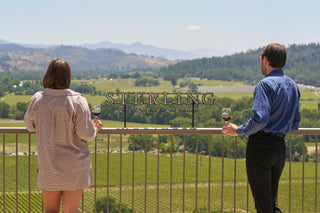
The Sterling Aerial Gondola is more than transportation. It is part of the Sterling Vineyards experience. Designed and manufactured by Doppelmayr, this advanced ropeway system combines innovative engineering with panoramic Napa Valley views.
Formerly known as the aerial tram, the reimagined Sterling Aerial Gondola features a custom triangular profile and unique lift angles that create a more private, immersive ride to the winery.
In this guide, we take you behind the scenes to explore how the system works and what makes it unlike any other winery gondola in the world.
Custom Design and Unique Angles
 |
 |
Unlike traditional ski lifts that operate in a straight up and down line, the Sterling Aerial Gondola follows a triangular route along the hillside. This custom engineering offers several benefits:
-
Increased privacy as cabins pass each other less frequently
-
Expanded panoramic views of Napa Valley
-
A more intimate and elevated guest experience
This design reflects both innovation and thoughtful hospitality, enhancing the journey before guests even reach the tasting terrace.
The Drive Terminal
 |
 |
The drive terminal is the operational heart of the gondola system.
Inside the terminal:
-
Cabins attach and detach from the haul rope
-
Grips pass through a compression rail system
-
The rail clamps or unclamps the grip safely
-
The haul rope cycles through the bull wheel
This process allows guests to load and unload smoothly while maintaining continuous rope movement.
The Bull Wheel
 |
 |
The bull wheel measures approximately 22 feet in diameter and plays a central mechanical role.
As the electric motor feeds the gearbox, the bull wheel rotates, powering the entire system. Its motion drives the haul rope and keeps cabins circulating efficiently through the terminal and along the route.
Center Carriage and Tension System

The center carriage maintains consistent tension on the haul rope.
As additional cabins and passengers increase overall system weight, hydraulic rams adjust automatically to preserve proper tension. This modern hydraulic system replaces older concrete counterweight methods, delivering greater precision and efficiency.
Grip Control and Cabin Speed
 |
 |
As cabins move through the terminal, a coordinated system of tires, belts, and pulleys regulates speed.
These components:
-
Slow cabins as they approach the loading platform
-
Maintain smooth transitions
-
Ensure controlled acceleration upon departure
The result is a safe, seamless ride for guests at every stage of the journey.
Safety and Maintenance

Safety remains central to gondola operations.
The system includes:
-
Multiple safety switches
-
A full emergency cord
-
A dedicated maintenance bay for grip and cabin servicing
-
Daily pre operation inspections
Each morning, trained technicians perform system checks to ensure optimal performance before guests board.
Built by Doppelmayr
The Sterling Aerial Gondola was engineered by Doppelmayr, a globally recognized Austrian manufacturer of advanced ropeway systems. Known for rigorous safety standards and cutting edge technology, Doppelmayr brings decades of expertise to the Sterling experience.
Frequently Asked Questions
How is the Sterling Aerial Gondola different from a ski lift?
Unlike straight line ski lifts, the Sterling gondola follows a triangular route with custom angles that enhance privacy and provide panoramic Napa Valley views.
Who built the Sterling Aerial Gondola?
The system was designed and manufactured by Doppelmayr, a global leader in ropeway engineering.
How does the gondola stay balanced?
A hydraulic tension system automatically adjusts to maintain proper rope tension as weight changes.
Is the gondola safe?
Yes. The system includes multiple safety mechanisms, daily inspections, and is engineered to meet rigorous industry standards.
Can the gondola operate year round?
Yes. The system is engineered for operation across seasons and weather conditions.